



You’ve found it. The right floor plan, a good location, less maintenance, great amenities, and a community that feels like somewhere you could genuinely enjoy the next stage of life. There’s only one challenge: your current house hasn’t sold yet. For many people considering downsizing, this creates uncertainty about whether to secure their next home now or wait until their existing property sells. In many situations, buyers may be able to reserve or even purchase a property in a 55+ community before completing their current sale. However, doing so requires careful planning. From reservation deposits and financing to carrying two properties and coordinating closing dates, understanding your options can help protect your money, reduce unnecessary stress, and create a much smoother transition into a retirement community.
1. Yes, You May Be Able to Reserve a Home Before Selling
Many buyers assume they must sell their existing property before they can secure a home in an active adult community. That’s not necessarily the case.
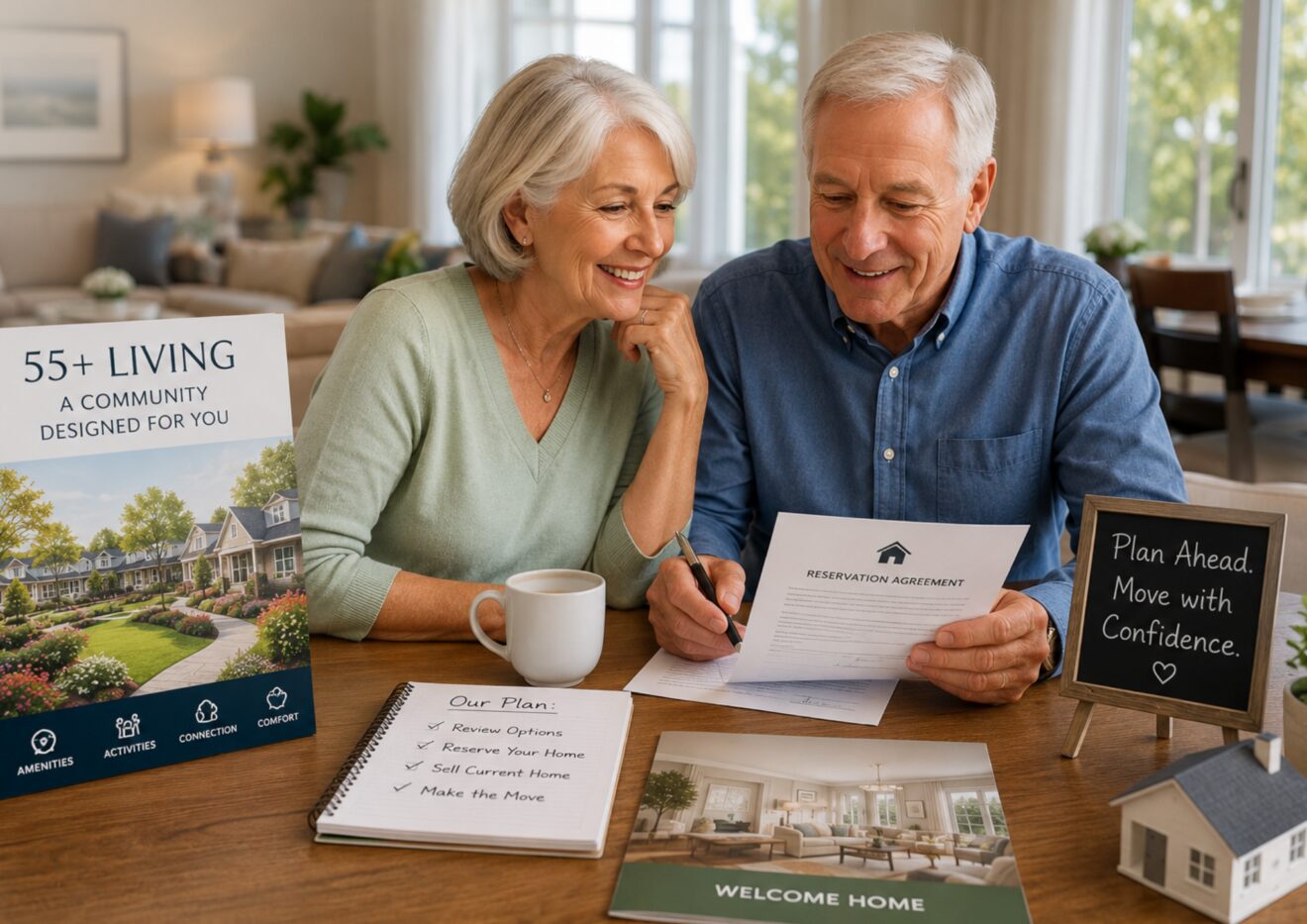
Depending on the development, you may be able to place a reservation deposit on an available home, condo, or new construction property. The deposit may hold the home or lot for a set period while you arrange financing and prepare your current property for sale. Policies differ significantly, however. Before handing over any money, understand whether the deposit is refundable, how long the reservation lasts, and what happens if your current home doesn’t sell.
A reservation deposit is a sum paid to temporarily hold a home or lot in a 55+ community. This deposit may be required to secure your place while you arrange financing or sell your current home.
2. Start by Understanding the Reservation Agreement
A reservation is not always the same thing as a firm real estate purchase agreement.
Some developers use reservation agreements to temporarily hold a property before the buyer enters a formal agreement of purchase and sale. Others may require buyers to commit much earlier. That’s why the details matter.
Ask what you’re actually agreeing to, how much capital is required, whether there are deadlines, and under what circumstances you could lose your deposit. Your real estate agent and lawyer should review the documents so you understand your obligations before committing to the deal.
3. Selling First Gives You a Clearer Budget
For many older adults, selling first is the more comfortable financial strategy.
Most downsizers have significant equity tied up in their existing property, and that equity may be needed to fund the next purchase. Selling first tells you exactly how much money you have available and makes deciding on an appropriate budget much easier.
It can also reduce financial pressure. Instead of worrying about maintaining two properties, you’ll know the proceeds from your sale are available for the next step. These financial considerations also matter because selling your home may free up capital for moving expenses, renovations, travel, or other future living costs, though some proceeds may need to cover closing costs, including land transfer tax and legal fees.
The downside? You may need temporary accommodations if you can’t find your next home before your current property closes.
4. Buying First Gives You More Certainty About Where You’re Going
There’s another side to the equation.
If you’ve found a home that fits your lifestyle, future needs, budget, and preferred community, buying first means you don’t have to wonder where you’ll live after your sale closes.
This can be especially appealing when homes rarely become available in a particular 55+ community or when demand is high. In those markets, some interested buyers move quickly to reserve a suitable home before it’s gone. Instead of selling first and then feeling pressured to find something quickly, you can secure the home you really want.
Buying first may also give you more time to organize your move, determine what furniture fits the new space, and transition at your own pace.
The concern is financial. If your existing property doesn’t sell as quickly as expected, you could temporarily become the owner of two homes.
5. Can You Afford to Carry Two Properties?
This is one of the key financial considerations that needs to be answered before making a commitment.
Owning two homes at the same time could mean two mortgage payments, insurance policies, utility bills, property taxes, maintenance expenses, and possibly HOA fees.
Homebuyers may need to verify their ability to cover overlapping housing costs before purchasing a new home. Consulting a financial advisor can help determine if you can carry multiple mortgages. A Home Equity Line of Credit (HELOC) can be used for a down payment on a new home.
Homebuyers should verify their ability to cover these overlapping housing costs before buying. A lender or financial advisor can help determine whether you would qualify to carry multiple mortgages and how long you could realistically manage those expenses.
Don’t build your strategy around the assumption that your current home will sell immediately. Ask your agent how long comparable homes are taking to sell and what price they are actually achieving.
Planning for a slower sale gives you a financial cushion if the market changes unexpectedly.
6. Bridge Financing May Help With the Transition
Sometimes you’ve already sold your existing home, but its closing date comes after the closing date of your new home.
Bridge financing is a short-term loan that helps buyers purchase a new home before selling their current one.
That’s where bridge financing can become useful.
A bridge loan is generally a short-term financing solution that helps cover the timing gap between two transactions. It can allow you to complete your new purchase before receiving the proceeds from your existing sale.
Some homeowners may also explore whether a Home Equity Line of Credit (HELOC) could provide funds toward their next purchase, subject to lender approval and their individual financial situation.
Neither option should be treated casually. Interest charges, lending requirements, and repayment terms can affect the overall cost of your move. Speak with your lender or financial advisor before relying on either strategy.
7. A Home Sale Contingency Can Reduce Your Risk
What if you’ve found the right home but aren’t comfortable purchasing it until your current property sells?
A home sale contingency is a clause in a purchase agreement that makes the purchase dependent on selling your current home within a specified period.
A sale-contingent offer may provide another option.
A home sale contingency makes your purchase conditional on selling your existing home within an agreed period. This can protect you from being forced to complete the new purchase if your home doesn’t sell.
The challenge is that the seller doesn’t have to accept it.
When multiple qualified buyers are competing for a property, sellers may prefer an offer without a home-sale condition. In a slower market, however, they may be more flexible.
Your agent can help assess the competition and determine whether including the condition makes sense without unnecessarily weakening your offer.
8. Closing Dates Can Solve More Than You Think
Sometimes the best solution doesn’t require complicated financing at all. It simply requires better timing.
Closing dates can be negotiated to accommodate the sale of a current home. For example, you may negotiate a longer closing on your purchase, giving you additional time to prepare, list, and sell your existing property.
The overall buying and selling process can often take several months once you account for preparing the home, marketing, negotiations, financing, legal work, and moving. Starting early gives you more options.
Using one REALTOR® to coordinate both transactions can also simplify communication. Your agent can see both sides of the timeline and help coordinate the sale, purchase, conditions, closing dates, and moving plans as one connected strategy rather than two separate transactions.
The goal isn’t simply to get both properties bought and sold. It’s to structure the timing so your move feels manageable and your financial exposure remains within a level you’re comfortable carrying.
9. Prepare Your Current Home for Sale Early
Even if you haven’t decided whether to sell or buy first, preparing your existing home early gives you more flexibility.
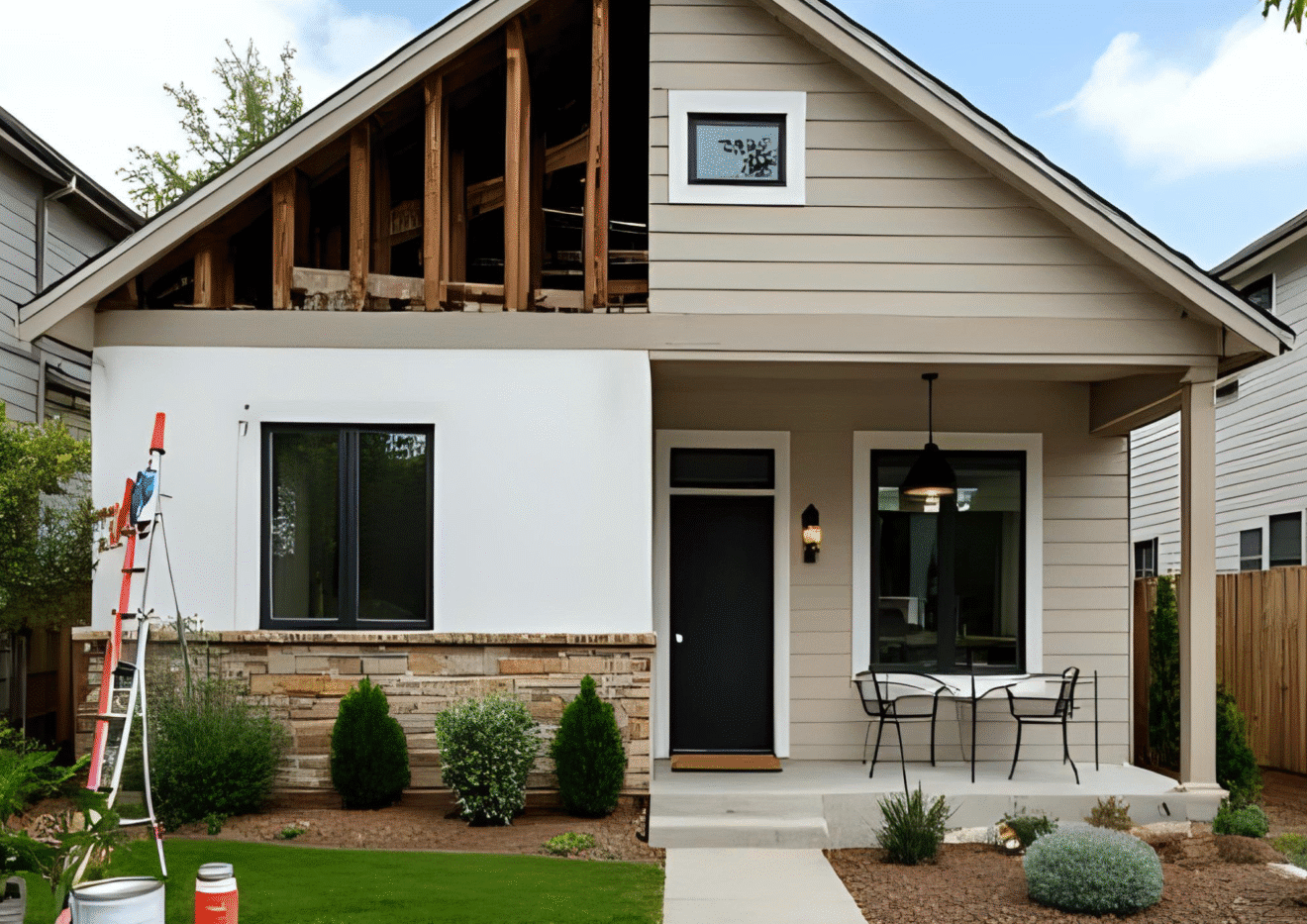
The entire selling process includes decluttering, repairs, cleaning, arranging furniture, staging, photography, marketing, showings, negotiations, and closing. Waiting until you’ve already reserved your next home can make all of this feel rushed.
Start by removing items you don’t plan to bring into your new space. Downsizing before listing also makes the eventual move easier. Then focus on small repairs, staging, and presentation improvements that can help maximize the sale price and make the property more appealing to potential buyers.
The objective is to have your home ready to enter the market quickly if the right opportunity appears in your preferred community.
10. Should You Sell Before or After Moving?
There’s a practical benefit to selling before you move: it reduces the financial burden of owning and maintaining two properties.
Once your current house closes, you’ll know exactly how much capital is available for your next purchase. That certainty can make budgeting much easier.
But selling after you’ve moved has advantages too.
An empty home can eliminate disruptive showings while you’re trying to enjoy everyday life. Buyers can visit without worrying about your schedule, and keeping the property clean becomes easier. On the other hand, staging can sometimes feel more natural when the home is still occupied with appropriately placed furniture.
The right choice depends on your finances, timing, and tolerance for managing two homes.
11. Understand the Community’s Age Requirements
Before reserving any home, confirm that you meet the age requirement and occupancy rules of that particular development.
Most 55+ communities require at least one household member to be 55 or older, and some allow up to 20% of residents to be under 55. Communities must maintain 80% of residents aged 55 or older, and HOA rules may further restrict under-55 residents.
Age requirements can differ between communities and jurisdictions. Depending on their governing rules, some communities allow up to 20% of residents to be under 55. Some developments require at least one occupant to be 55 or older, while others may establish different rules concerning spouses, children, caregivers, or other family members.
You may see references online to an “80% rule.” That comes from U.S. federal housing law, under which qualifying 55+ housing generally must have at least one person aged 55 or older in at least 80% of occupied units. That should not be assumed to be the rule for an Ontario community.
For an Ontario purchase, verify the actual declaration, bylaws, occupancy requirements, and other governing documents for the specific community you’re considering. The application or approval process may also require both age and financial verification.
12. Review the Rules Before Falling in Love With the Home
It’s easy to become focused on the kitchen, backyard, or floor plan and forget that you’re also buying into a community.
Review its rules before committing.
Some communities regulate pets, parking, visitors, renovations, rentals, landscaping, exterior appearance, and how shared facilities can be used.
Think about your future needs, too. Will children or grandchildren visit frequently? Could another person eventually live with you, such as a spouse or aging parents, or would community rules limit that? Are pets important? Do you plan to travel for several months each year?
A home can check every box and still be the wrong investment if the community’s rules don’t match how you want to live.
13. Calculate HOA and Condo Fees Carefully
Many active adult developments charge HOA fees, condominium fees, land-lease charges, or other recurring expenses.
HOA fees are recurring charges that cover services such as landscaping, maintenance, and amenities. Homebuyers should understand the community’s fee structure before finalizing their purchase.
These fees may pay for landscaping, snow removal, exterior maintenance, common areas, recreation facilities, and other services. Exactly what’s included will vary by development.
Homebuyers should understand the community’s fee structure before finalizing a purchase. Ask what the current fees are, what’s included, how frequently they’ve increased, and whether any special assessments or major capital projects are expected.
Reduced maintenance is one of the major benefits of this type of lifestyle, but you still need to understand what that convenience will cost.
14. Look Beyond the House at the Lifestyle
A retirement community isn’t simply a collection of houses.
The real question is whether you can picture yourself enjoying everyday life there.
Many 55+ communities offer fitness centres, swimming pools, golf courses, clubhouses, walking trails, hobby spaces, and organized social activities. Some may also provide concierge-style services or enhanced security features, and many have gated entrances for added security that appeals to seniors.
For many older adults, these features create opportunities to meet new friends and develop a stronger sense of belonging.
However, don’t pay for amenities simply because they look impressive in a brochure. Focus on the facilities and services you’ll genuinely use. Your next home should support your preferred lifestyle, rather than force you to adapt to one that doesn’t suit you.
15. Think About What You’ll Need Five or Ten Years From Now
It’s natural to choose a home based on what works today. Smart downsizing also considers what many seniors may need five or ten years from now.
Look at stairs, entrances, bathroom layouts, bedroom locations, parking, transportation, healthcare access, and proximity to loved ones. Most active adult communities are built for independent living, so they typically do not provide on-site assistance with daily activities or medical care if your needs change later.
Your health and mobility may be excellent today, but choosing a home that can adapt to changing circumstances may allow you to remain independent longer.
Location matters as well. Being close to medical services, shopping, family, recreation, and everyday necessities can become increasingly valuable over time.
The goal isn’t simply to find a smaller house. It’s to choose a home and community that can continue working for you as your needs evolve.
16. Create One Plan for Both Transactions
The easiest way to reduce unnecessary stress is to stop thinking of your sale and purchase as two unrelated transactions.
Create one transition plan that coordinates both the move itself and the business side of the sale and purchase.
Your REALTOR®, lender, lawyer, and financial advisor should understand your preferred timing and financial limits. Determine how much equity you need from the current property, whether you can carry overlapping expenses, how long you’re comfortable waiting, and which conditions you need to protect yourself.
Then build your strategy around those answers.
If a great home becomes available, you’ll already know whether you can reserve it, make a conditional offer, use bridge financing, or comfortably purchase before selling.
Preparation gives you options—and options are particularly valuable when inventory in your preferred community is limited.
Practical Tips Before Reserving Your Next Home
Before committing to a property in an active adult community:
- Confirm whether the reservation deposit is refundable or non-refundable.
- Have your lawyer review the reservation or purchase agreement.
- Speak with your lender before assuming you can carry two properties.
- Calculate mortgage payments, taxes, insurance, utilities, and HOA or condo fees.
- Ask whether a sale contingency is possible.
- Explore whether closing dates can be coordinated.
- Prepare your existing home for sale before you need to list it.
- Review the community’s age, visitor, pet, rental, and occupancy rules.
- Compare recent sales of comparable homes before committing to a price.
- Evaluate the community based on your current lifestyle and future needs.
The earlier you answer these questions, the easier it becomes to act when the right property appears.
Related Articles You May Enjoy
If you’re considering downsizing or moving into a 55+ community, these Bahia Realty Group articles are a natural next read:
- How to Choose the Right 55+ Community in Ontario: 10 Questions Every Buyer Should Ask
- How to Compare 55+ Communities: A Buyer’s Checklist
- What Expenses Should You Expect When Moving Into a 55+ Community?
Conclusion
The decision to reserve or purchase your next home before selling your current property comes down to balancing certainty, flexibility, and financial comfort. Buying first can help you secure the home you want and make your transition feel less rushed, while selling first can give you a clear budget, unlock the equity in your current property, and reduce the financial pressure of carrying two homes at once. The right strategy depends on your finances, current market conditions, the rules of the specific community, and what works best for you and your family. Planning early, understanding the numbers, and coordinating both transactions can make the entire downsizing process much more manageable.
If you’re considering downsizing or moving into a 55+ community in Ontario, Bahia Realty Group Inc. can help you plan both sides of the move, including the transition itself. From maximizing the value of your current property to finding a community that supports your lifestyle, financial goals, and future needs, we’ll create a strategy based on your individual circumstances and guide you through each step with confidence.
Bahia Realty Group Inc.
416-498-3444
jas@thebahiateam.com
www.bahiarealtygroupinc.com