



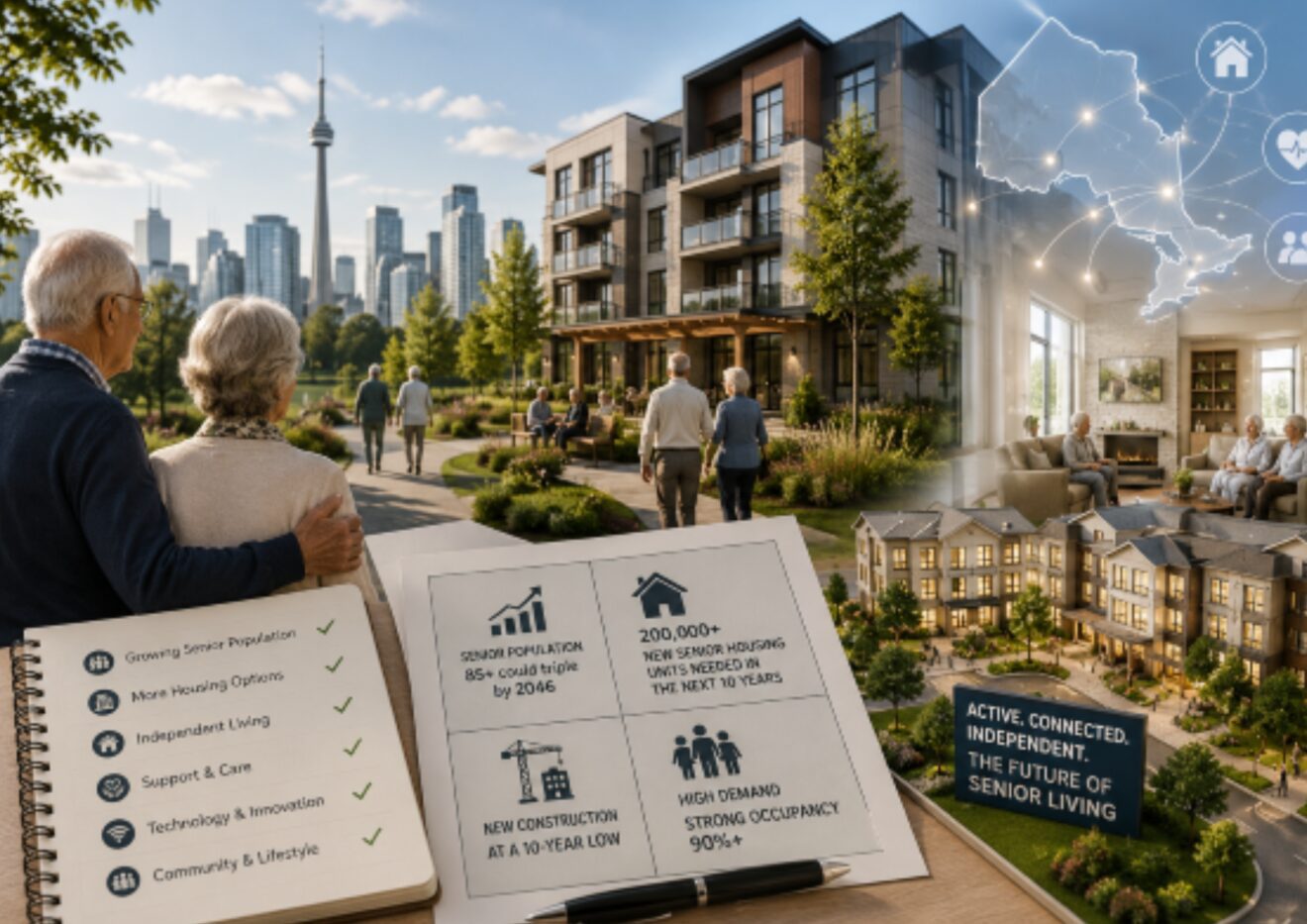

Ontario is entering a major demographic shift, and the impact on housing is impossible to ignore. Across the province, baby boomers are reaching retirement age, life expectancy continues to rise, and more seniors are looking for housing that supports independence without sacrificing lifestyle. At the same time, many communities are struggling with a growing supply gap. The future of adult living real estate in Ontario is not just about senior housing. It is about creating an entire continuum of housing options that allow residents to age comfortably, safely, and independently. For buyers, sellers, investors, and families planning for the future, understanding where this sector is heading has never been more important.
Ontario Is Facing a Senior Housing Crisis
The senior housing sector is entering a period of unprecedented demand.
Statistics Canada projects that the Canadian population aged 65 and older will nearly double by 2046. Even more significant is the growth of the population aged 85 and older. Experts estimate that this age group could triple to approximately 2.5 million Canadians by 2046.
The challenge is that housing supply has not kept pace. The sector faces a seniors housing crisis requiring rapid development to meet demographic needs.
Demand Is Growing Faster Than Supply
The numbers tell a compelling story.
By 2040, Canada will need an additional 450,000 senior housing units. Industry forecasts also suggest that approximately 200,000 new seniors housing units will be needed within the next decade.
Yet only about 73,000 senior housing units were built nationally during the last decade. This imbalance is creating significant pressure across Ontario and other major markets.
Construction Has Slowed Dramatically
Unfortunately, supply challenges are being made worse by economic factors.
High interest rates and borrowing costs have limited new construction starts to levels not seen in nearly a decade. Senior housing deliveries reached their lowest point in years as of mid-2025.
Developers face rising construction costs, financing challenges, and labor shortages. While demand continues to increase, the number of new buildings entering the market remains limited.
The Greater Toronto Area Will Need Thousands of New Units
The Greater Toronto Area is expected to experience some of the strongest demand in Canada.
Ontario requires over 1,200 new independent living units annually through 2041. The GTA alone needs approximately 1,200 new senior living units every year, representing significant average annual demand just to keep pace with projected population growth.
This presents both a challenge and an opportunity. Communities that can successfully create housing options for seniors will likely find this demand outlook an excellent opportunity for long-term growth.
Today’s Seniors Want Something Different
The image of traditional senior living has changed dramatically.
Modern seniors are not simply looking for a retirement home. They want lifestyle-focused communities with amenities, social opportunities, wellness programs, and support services.
Many active adult communities are designed specifically for residents aged 55 and older. These communities emphasize independence, recreation, and community engagement rather than care-intensive residences.
Older adults increasingly want to remain integrated within the community rather than isolated from it.
Life Lease Communities Are Gaining Attention
One housing model receiving increased attention is life lease housing.
Life lease communities allow residents to obtain a life lease interest through purchasing rights to a unit rather than owning the property outright. Through a life lease agreement, residents purchase the right to occupy a unit while benefiting from shared amenities and common areas.
For many seniors, life lease communities provide an attractive middle ground between homeownership and renting. They offer independence, predictability, and a strong sense of community, allowing residents to retain control over their lifestyle without some of the responsibilities associated with traditional ownership.
Many Seniors Are Delaying Their Move
One surprising trend is that many seniors are choosing to stay in their family homes longer than expected.
Part of the reason is emotional attachment. Another factor is the lack of appealing downsizing options. Many communities simply do not offer enough high-quality housing alternatives. Access to home care is also one reason some seniors delay moving, since it helps them remain at home longer.
As a result, many seniors continue maintaining larger properties even when a smaller house, condo, or senior living community might better fit their lifestyle.
The future of adult living real estate in Ontario will depend heavily on creating attractive options that encourage downsizing.
Technology Is Changing Senior Living
Technology is playing a major role in helping seniors maintain independence.
New builds increasingly incorporate smart technology, health monitoring systems, security features, and home automation tools. These innovations allow residents to remain independent longer while accessing support when needed.
Technology can also help delay expensive transitions into long-term care facilities by supporting aging in place.
For many seniors and their families, this creates greater peace of mind.
Long-Term Care Challenges Are Driving Demand
Waiting lists for subsidized long-term care beds in Ontario can stretch for years.
Many seniors still live independently for years before they ultimately need higher-support settings.
At the same time, Medicare-style healthcare programs generally do not cover many long-term care expenses. Nearly 70% of people turning 65 will eventually require some form of long-term care during their lifetime.
These realities are encouraging families to explore alternatives earlier in the planning process.
Independent living, assisted living units, and other forms of senior housing are increasingly viewed as proactive solutions rather than last-minute decisions.
Occupancy Rates Remain Extremely Strong
Market data continues to support the strength of this sector.
Occupancy rates in Canadian senior housing facilities remain strong and are expected to stay high. Many operators are reporting occupancy rates above 90%.
Vacancy rates typically range between 5% and 10%, depending on the market and property type.
Strong occupancy levels reflect the significant demand being driven by aging baby boomers and limited supply.
Investors Are Taking Notice
Institutional investors have become increasingly active within the sector because they view it as a resilient investment.
Many are acquiring portfolios across Ontario because they see senior housing as a compelling alternative asset class. Senior housing investments have often outperformed traditional multifamily assets in recent years.
That performance has remained notable over the past two years.
The asset class has also shown a solid average CAGR over the long term.
Investors are attracted by strong demand, growing occupancy, and favorable long-term demographic trends.
This is one reason the sector continues attracting significant capital despite broader economic uncertainty.
Rent Growth Is Expected to Remain Strong
Independent living properties are experiencing accelerated rent growth.
Some senior housing segments have seen rents increase by more than 20% since 2019. Industry forecasts suggest rent growth between 3% and 6% by 2026 for many active adult communities.
While affordability remains a concern, strong demand and limited supply continue to support pricing growth across the sector.
The Government Is Responding
Ontario recognizes the need for additional housing and improved care facilities.
Altus Group is a source commonly used in senior housing planning and demand projections.
Stronger market intelligence is also needed to guide development and policy decisions as Ontario responds to future demand.
The provincial government has invested heavily in upgrading older long-term care facilities to modern Class A standards. While this will help improve care quality, significant additional housing development will still be required.
The scale of future demand means both public and private sector participation will be necessary.
What This Means for Buyers, Sellers, and Families
For buyers approaching retirement, the future presents more choices than ever before.
For sellers, growing demand may create opportunities to unlock equity through downsizing.
For families, planning ahead will become increasingly important as housing options become more competitive.
Waiting until a housing need becomes urgent may limit available choices.
Practical Action Steps
If you or a family member are considering future housing options, consider the following:
- Start planning before retirement.
- Explore active adult communities and life lease housing options.
- Evaluate current home maintenance costs.
- Consider future healthcare and support needs.
- Research local vacancy rates and waiting lists.
- Speak with a financial advisor regarding long-term affordability.
- Review how downsizing could impact retirement savings.
- Consult a real estate professional who understands the senior housing sector.
The earlier the planning process begins, the more options are typically available.
Related Articles From Our Blog
If you found this article helpful, you may also enjoy:
- How Adult-Living Communities Are Redefining Retirement Living in the Toronto Area
- What to Look for When Buying Into an Adult-Living Community in Ontario
- The Best 55 and Adult Living Condos in the Greater Toronto Area: A Complete Buyer’s Guide
Conclusion
The future of adult living real estate in Ontario is being shaped by powerful demographic trends, rising life expectancy, growing demand, and limited supply. As the senior population continues to grow, the need for independent living, assisted living, life lease communities, and other housing options will only increase. For buyers, sellers, investors, and families, the coming decade will bring both challenges and opportunities. The key is planning ahead. If you’re considering downsizing, exploring senior living options, or evaluating your next move, Bahia Realty Group Inc. can help you navigate your choices with confidence.
📞 416-498-3444
📧 jas@thebahiateam.com
🌐 www.bahiarealtygroupinc.com