



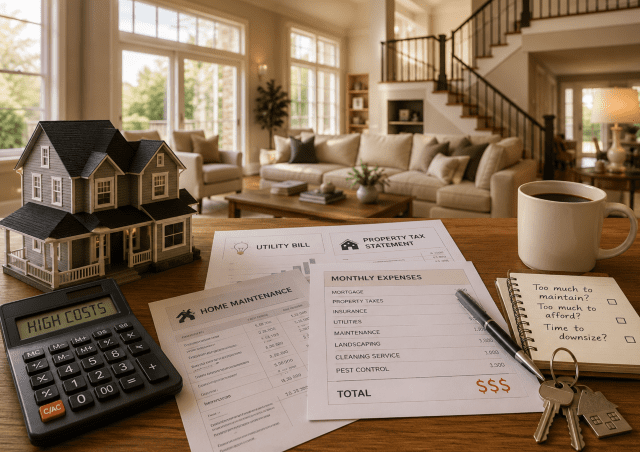

Many homeowners assume that staying in their current house is the most affordable option. After all, if the mortgage payment is manageable and the family has lived there for years, why move? Yet the hidden costs of staying in a home that’s too large can quietly add up over time. What starts as a comfortable single family home can eventually become a source of rising expenses, more maintenance, and unnecessary stress. For homeowners across the GTA, understanding the true cost of owning more space than you need can help you make smarter real estate decisions for the next stage of life.
1. Bigger Homes Mean Bigger Utility Bills
One of the highest hidden costs of a large house is the ongoing expense of utilities.
More rooms mean more space to heat in the winter and cool in the summer. Larger homes often require more electricity, water, and natural gas. Many homeowners are surprised when they calculate the average annual cost of utilities for a home that has several unused bedrooms or living areas.
Even if you only use part of the house, you still pay to maintain comfortable temperatures throughout the building. Over time, these utility bills can represent thousands of dollars that could be redirected elsewhere.
2. Home Maintenance Never Stops
A larger property almost always comes with higher home maintenance costs.
There is more roof to inspect, more windows to clean, more flooring to maintain, and more systems that can fail. Every homeowner eventually faces repairs and replacement projects.
The challenge is that many of these expenses arrive as a lump sum. One year it might be a roof replacement. The next year it could be new appliances, HVAC repairs, or exterior maintenance.
The larger the home, the greater the potential maintenance costs.
3. Lawn Maintenance Costs Add Up Quickly
Many homeowners underestimate how much time and money goes into maintaining a large yard.
Lawn maintenance, landscaping, irrigation systems, tree trimming, and seasonal cleanup all require attention. Some homeowners hire professionals, while others handle the work themselves.
Either way, there is a cost.
For busy families or older homeowners, lawn maintenance can become more of a burden than a benefit. What once felt like a dream backyard may eventually feel like another item on a never-ending to-do list.
4. Property Taxes Increase With Home Value
Property taxes are another factor that deserves careful attention.
Many GTA homeowners focus primarily on their mortgage payment while overlooking rising tax rates and property taxes, which vary significantly by location and home value. Property taxes have risen an average of 27% from 2019 to 2024, so it’s important to figure these local costs into the true expense of keeping a larger home.
Unlike your mortgage, property taxes never disappear entirely. Even after a home is paid off, these costs continue.
For homeowners approaching retirement, this can become a significant part of their annual budget, with property taxes for some households reaching roughly $500 to $1,000 per month.
5. Insurance Premiums Are Often Higher Than Expected
Homeowners insurance is designed to protect your investment, but larger homes generally come with higher insurance premiums.
A bigger house usually means a higher replacement value. This impacts homeowners insurance costs and may increase coverage requirements.
Natural disasters, severe weather events, and rising construction costs have also contributed to increased insurance premiums across many parts of Canada.
Many homeowners are surprised to learn how much they pay simply to maintain adequate coverage.
6. Security Costs Can Be Ongoing
The larger the property, the more security concerns often arise.
Many homeowners invest in a security system, cameras, smart locks, or a professional security service to help protect their property.
While security provides peace of mind, it also adds another recurring expense. Monitoring fees, equipment upgrades, and maintenance all contribute to the overall cost of homeownership.
For some homeowners, simplifying their living situation can reduce both costs and concerns.
7. Unused Space Still Costs Money
One of the most overlooked hidden costs is paying for space that no longer serves a purpose.
Perhaps children have moved out. Maybe a home office is rarely used. Guest rooms may sit empty for months at a time.
Yet every room still contributes to utility bills, maintenance, insurance, and cleaning costs. In larger homes, that can also matter when longer transportation or commuting costs add up.
Many homeowners eventually realize they are paying for space they rarely enjoy. The true cost of unused square footage can be substantial over time.
8. Older Homes Often Require More Repairs
The age of a property matters.
Older homes can offer tremendous character and charm, but they frequently require more maintenance and repairs. Plumbing systems, electrical components, windows, and appliances eventually reach the end of their lifespan.
Homeowners must remain prepared for unexpected projects.
A home inspection can identify potential issues, but no inspection can predict every future repair. Being responsible for an aging property requires a financial plan and flexibility, especially since unexpected repairs are common enough that, as of 2025, 42% of homeowners reported financial regret over maintenance costs.
9. Opportunity Cost Matters Too
The hidden costs are not always direct expenses.
There is also the opportunity cost of the money tied up in the property.
For example, some homeowners could free up significant equity by selling and moving to a condo, a smaller house, or a new home that better fits their current lifestyle, though any new purchase also comes with closing costs that often range from 2% to 5% of the home price.
That equity could be invested, used for travel, family support, retirement planning, or other life goals.
The question is not simply what the home costs. It is also what opportunities are being missed by keeping more house than necessary.
10. The Emotional Side of Homeownership
For many people, the decision is not purely financial.
A house often represents memories, milestones, and years of family life. Letting go of a long-time home can feel emotional.
However, homeownership should support your lifestyle rather than create unnecessary burdens.
Some homeowners discover that a smaller home allows them to spend less time on maintenance and more time enjoying life. Others find that a new house offers conveniences and lower upkeep they did not have before.
The goal is not simply to own real estate. The goal is to own the right real estate for your current stage of life.
Practical Tips for Homeowners Considering a Change
Before deciding whether to stay or move, consider the following:
- Calculate your total homeownership costs, not just your mortgage payment.
- Review utility bills from the past 12 months.
- Estimate upcoming maintenance and replacement projects.
- Compare homeowners insurance and property tax expenses.
- Determine how much space your family actually uses.
- Speak with a trusted real estate agent about current market conditions.
- Explore whether a condo, smaller house, or newer building may better fit your needs, since some condos or planned communities include hoa dues that cover landscaping and maintenance of shared spaces, with average fees around $243 per month but costs ranging from under $100 to over $1,000 depending on the property and amenities.
A simple review can often reveal opportunities to reduce expenses while improving quality of life.
Related Articles From Our Blog
If you found this article helpful, you may also enjoy:
- Smart Strategies for Downsizing in the GTA
- Why You Shouldn’t Wait To Move Up
- Do I Need to Renovate Before I Sell?
Conclusion
The hidden costs of staying in a home that’s too large extend far beyond the monthly mortgage. Utility bills, property taxes, homeowners insurance, maintenance costs, security expenses, repairs, and unused space can quietly impact your finances year after year. While every homeowner’s situation is different, understanding the true cost of homeownership is an important first step toward making informed decisions. If you’re wondering whether your current home still fits your lifestyle and long-term goals, our team would be happy to help.
Bahia Realty Group Inc.
📞 416-498-3444
📧 jas@thebahiateam.com
🌐 www.bahiarealtygroupinc.com
Whether you’re considering downsizing, buying, selling, or simply exploring your options, contact us for a no-obligation conversation about your next move.