


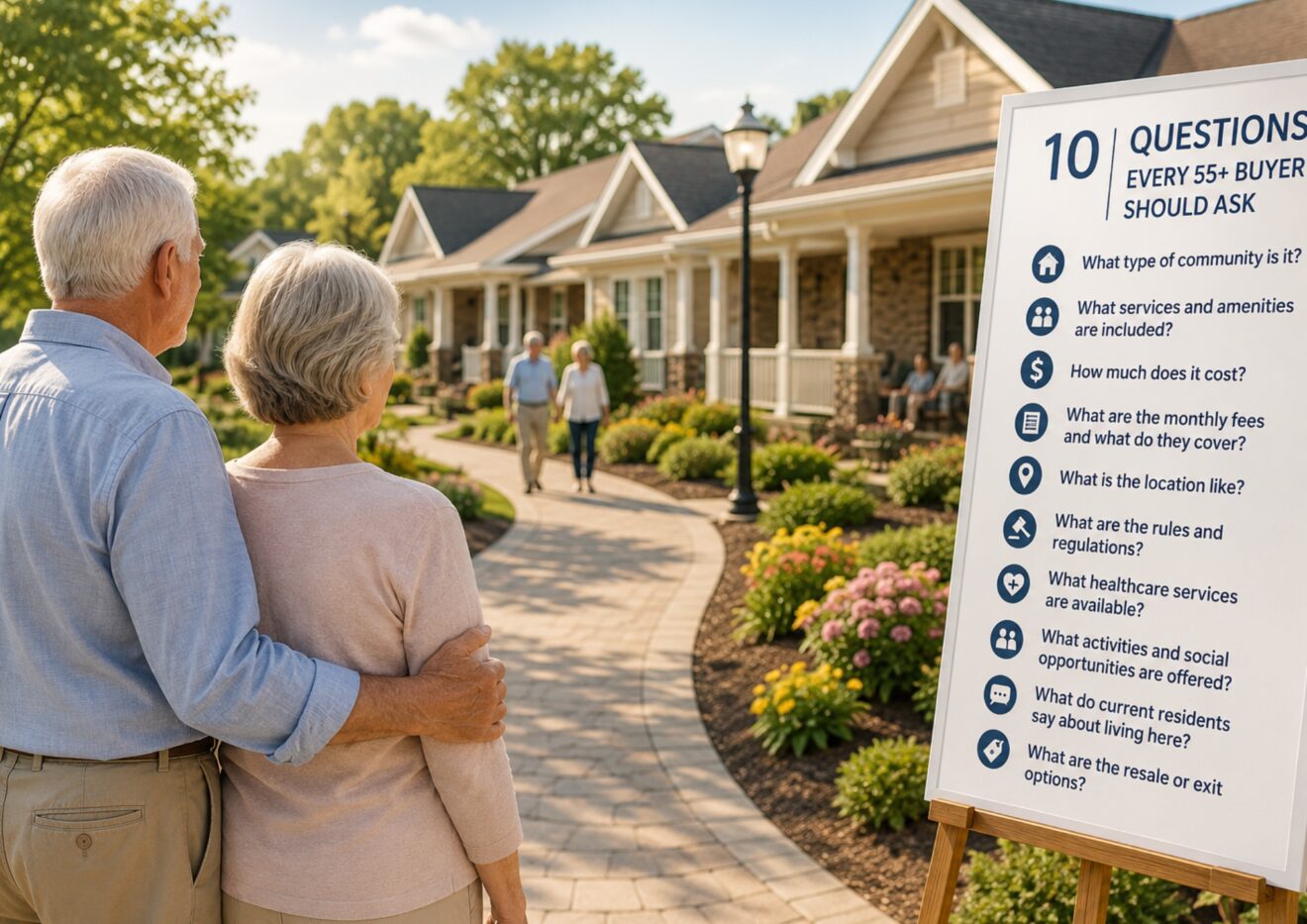

Choosing the right 55 community in Ontario starts with asking ten key questions about your retirement goals, age requirements, ownership type, fees, amenities, social life, healthcare access, aging support, community rules, and resale value before you purchase. For adults 55 and older considering a home in a 55+ community, those details shape far more than the property itself: they affect your monthly costs, daily comfort, independence, and how well the community will fit your needs over time.
For many people, buying in a 55+ community marks the beginning of an exciting new chapter. It’s a chance to simplify daily life, enjoy new friendships, reduce maintenance, and focus on the lifestyle you’ve worked hard to achieve. But every community is different, with its own amenities, ownership structures, activity level, total cost of ownership, and access to nearby services. Whether you’re just beginning to explore retirement communities in Canada or you’re ready to decide on a specific community in Ontario, these ten questions will help you compare your options and make a confident, informed decision about retirement living.
1. Does the Community Match Your Retirement Goals?
Every buyer has a different vision of retirement. Some imagine quiet mornings and peaceful walking trails, while others want packed social calendars filled with fitness classes, clubs, travel groups, and recreational events. Before speaking with a real estate agent, take time to define what your ideal lifestyle looks like.
Your retirement goals should guide every decision you make. Some active adult communities are designed for residents who enjoy golf, tennis, swimming, and organized social activities. Others focus on privacy and low-maintenance living with fewer organized events.
Think beyond today. Consider how you want your daily life to look five, ten, or even fifteen years from now. The right community should continue supporting your interests as your needs evolve.
2. Does the Community Meet Ontario’s Age Requirements?
One of the biggest misconceptions about an age-restricted community is that everyone living there must be over 55. That isn’t always the case.
Generally, under Canadian housing guidelines, at least one household member must be 55 or older. In addition, communities must maintain 80% of residents aged 55 or older, while some communities allow a limited percentage of occupants under 55.
This is why understanding the age requirement and specific age restrictions before purchasing is so important. Every particular community may interpret its bylaws differently.
If you regularly host adult children, grandchildren, or younger family members, ask whether the community has policies regarding long-term visitors, for example, whether an adult child staying for several months is treated differently than a short holiday visit.
Some age restricted housing communities also place limits on visitors under age 55, particularly when extended stays are involved.
3. What Type of Ownership Are You Buying?
Not every 55+ community follows the same ownership model.
Some are freehold properties where owners fully own both the home and land. Others operate as condominiums with shared common elements managed by a homeowners association. Some communities are land-lease developments where residents own the home but lease the land beneath it.
Each ownership structure carries different responsibilities, monthly fees, and long-term financial implications.
Before you sign any paperwork, understand exactly what you’re buying. This knowledge can influence financing options, maintenance obligations, resale opportunities, and future investment value.
It’s also worth discussing whether reverse mortgages, refinancing, or other finance options work differently depending on the ownership type.
4. Are the HOA Fees Worth What You Receive?
Many buyers focus primarily on the purchase price and forget about ongoing monthly expenses.
In most retirement communities, HOA fees help maintain common areas, landscaping, snow removal, security, recreational facilities, and shared amenities.
However, HOA fees can be high and increase over time, so it’s important to understand exactly what’s included.
Ask whether there have been recent increases, whether special assessments are anticipated, and if reserve funds are adequately funded.
Remember that your total costs extend beyond your mortgage payment. Several factors contribute to your monthly budget, including HOA fees, insurance, utilities, maintenance, and possible special assessments.
A lower-priced home may actually become more expensive if ongoing community fees continue rising year after year, since many factors affect whether a community remains affordable over time, not just the purchase price.
5. What Amenities Will You Actually Use?
Beautiful brochures often showcase impressive clubhouses, fitness centres, swimming pools, pickleball courts, and golf courses.
While these features look attractive, ask yourself a simple question:
Will I actually use them?
Many 55+ communities offer amenities like fitness centers, pools, walking trails, hobby rooms, and organized recreational activities. These features often help create an enjoyable active adult lifestyle.
The best communities aren’t necessarily the ones with the longest list of amenities—they’re the ones that match your interests and support the life you want to live.
Ask current residents which amenities they use most often. Their answers may be very different from the marketing brochure.
6. How Active Is the Community?
One of the greatest advantages of independent living is the opportunity to build meaningful relationships.
Many residents choose these communities not only because of the homes themselves but because of the people who live there.
Many 55+ communities provide organized events that promote social engagement, helping newcomers quickly develop friendships and a strong sense of belonging.
If possible, visit during an event instead of simply touring the property.
Talk with current residents. Ask what they enjoy most, whether participation is encouraged, and how welcoming the community feels to new neighbors.
You’ll often learn more from a casual conversation over coffee than from hours of online research.
7. Is Healthcare Easily Accessible?
Your health needs today may be very different from your needs ten years from now.
That’s why proximity to medical services and healthcare services should always be part of your decision.
Key factors include location and proximity to healthcare and family support. Even healthy, active buyers benefit from having hospitals, specialists, pharmacies, and urgent care nearby.
Easy access to healthcare becomes increasingly valuable over time, especially if mobility changes.
Evaluate whether the community is close to physicians, diagnostic centers, rehabilitation facilities, and emergency care.
Choosing a good location near essential services can provide peace of mind for both you and your family.
8. Will This Home Support You as You Age?
Many buyers focus on the present instead of preparing for the future.
One of the greatest strengths of modern senior housing is that many homes are specifically designed for aging in place rather than functioning as a retirement home.
Look for features like single-floor living, wide hallways, step-free entrances, larger bathrooms, and accessible layouts.
These design elements can make a tremendous difference if mobility changes later in life.
Choosing a home that supports long-term independent living may allow you to remain comfortably in your new home for many more years while reducing the likelihood of another move.
As you compare many communities, ask whether each property supports the current lifestyle of seniors and their future health needs.
9. What Are the Rules for Visitors, Pets, and Everyday Living?
Every 55 community has its own rules, and those rules can have a major impact on your day-to-day experience.
Some communities place restrictions on overnight guests, while others may limit how long children, grandchildren, or younger family members can stay. There may also be regulations regarding seasonal visitors or temporary occupants. Understanding these policies before you buy can prevent unexpected surprises.
If pets are part of your family, don’t assume they’re automatically welcome. Many homeowners association rules limit the number, size, or breed of pets. Some communities also regulate fencing, landscaping, exterior paint colors, parking, and even holiday decorations.
Take time to read the community documents carefully. Ask questions about visitor policies, pet ownership, and property appearance standards. The best community is one whose rules support your preferred lifestyle while maintaining the appearance and value of the neighborhood.
10. How Well Has the Community Held Its Value?
Buying a home is more than finding a place to live—it’s also an important financial decision.
Although homes in a 55+ community often sell for lower prices than unrestricted homes, buyers shouldn’t assume they’re making a poor investment. Instead, look at the community’s resale performance over several years.
The resale history in a 55 plus community can indicate potential value retention, but several factors contribute to that outcome—not just one metric like the average sale-to-list price ratio. Review how long homes typically remain on the market, the average sale-to-list price ratio, and whether values have remained relatively stable.
Because 55+ communities generally appeal to a smaller buyer pool, resale value may be limited due to a smaller buyer pool. However, desirable locations with strong amenities, excellent management, and quality construction are all elements that contribute to stronger resale performance.
Ask your realtor or real estate agent to provide historical sales data so you can compare one specific community against other nearby developments.
Consider the Total Cost of Ownership
Many buyers focus only on the listing price, but smart purchasing decisions require looking at every expense involved.
In addition to the purchase price, consider property taxes, insurance, utilities, maintenance, HOA fees, and possible special assessments. Additional costs may include special assessments and amenity fees, especially if the community plans major improvements.
Review your expected monthly expenses alongside your retirement income and long-term financial plan.
Understanding your total costs today helps avoid financial stress later. The goal is to enjoy retirement—not worry about unexpected expenses every year.
Visiting at Different Times
Explore the Community at Different Times
Never make your decision after a single visit.
Visit the community during weekdays, evenings, and weekends. Walk through common areas, observe how residents interact, and see whether the atmosphere feels welcoming.
Spend time in nearby restaurants, shopping centers, parks, and walking trails. Notice traffic patterns and how convenient daily errands will be.
The more you explore, the easier it becomes to picture your future daily life in the neighborhood.
Resident Perspectives
Talk to Current Residents
No brochure provides better insight than the people who already live there.
Take a few minutes to talk with current residents about their experiences. Ask what they love, what they wish they had known before buying, and whether the community has changed over the years.
You’ll often discover valuable information about management, maintenance, neighbor relationships, and overall satisfaction.
Most older adults are happy to share their experiences with prospective buyers, and those conversations can provide confidence in your decision.
Family Connections
Think About Family Connections
Retirement doesn’t mean disconnecting from loved ones.
Consider how close you’ll be to your adult children, grandchildren, relatives, and lifelong friends. While many people enjoy moving to quieter areas of the country, others prefer remaining close to family support systems.
A convenient location makes family visits easier and provides additional peace of mind if assistance is ever needed.
Choosing a good location often means balancing privacy with accessibility.
Planning for Healthcare
Evaluate Future Healthcare Needs
Even if you’re in excellent health today, planning ahead is one of the smartest decisions you can make.
Look for communities offering easy access to hospitals, specialists, pharmacies, rehabilitation centres, and other healthcare services.
Choosing a home close to quality medical services can help you remain independent for longer while reducing stress for both you and your loved ones.
Planning for tomorrow doesn’t mean expecting the worst—it simply means making informed decisions today.
New vs. Established Communities
Compare New Construction and Established Communities
Some buyers prefer new construction, while others appreciate mature neighborhoods with established landscaping and active social calendars.
Newer developments may offer the latest floor plans, energy-efficient features, and modern amenities. Older communities often provide larger lots, mature trees, stronger resident networks, and more predictable operating costs.
Ask whether the community is still under construction, or if all phases have already been completed.
Comparing both options helps you determine which best aligns with your long-term priorities.
Work With a Real Estate Agent Who Understands 55+ Communities
Not every real estate professional specializes in retirement communities.
An experienced realtor can explain ownership structures, compare communities, review historical sales data, identify hidden costs, and help you understand complex documents before you purchase.
They can also explain local market conditions, resale trends, financing options, and which communities best match your goals.
Choosing the right professional is just as important as choosing the right home.
Practical Tips Before You Buy
Before making an offer, remember to:
- Confirm the age requirement and community restrictions.
- Review HOA documents and understand all monthly fees.
- Ask about visitor policies for children, adult children, and guests.
- Verify pet regulations.
- Compare ownership types, including freehold, condominium, and land-lease.
- Review historical resale data.
- Calculate your complete monthly budget.
- Visit the community multiple times.
- Meet current residents whenever possible.
- Ensure the home supports both your current lifestyle and future health needs.
Taking these simple steps can help you make a confident, informed decision.
Related Articles You May Find Helpful
If you’re considering a move into a 55+ community, you may also enjoy these articles from the Bahia Realty Group blog:
- The Best 55 and Adult Living Condos in the Greater Toronto Area: A Complete Buyer’s Guide
- The Future of Adult-Living Real Estate in Ontario
- What to Look for When Buying Into an Adult-Living Community in Ontario
Conclusion
Choosing the right 55+ community is about much more than finding a beautiful home. It’s about selecting a place that supports your lifestyle, financial goals, future health, and the type of life you want to enjoy in retirement. By asking the right questions about ownership, HOA fees, medical services, resale value, amenities, restrictions, and long-term costs, you’ll be in a much stronger position to make a confident decision. Every buyer’s journey is different, and taking the time to compare many communities can help ensure your next move is the right one.
If you’re considering buying or selling in a 55+ community anywhere in Ontario, Bahia Realty Group Inc. is here to help. Our team understands the unique considerations that come with active adult living and can guide you every step of the way.
Bahia Realty Group Inc.
📞 416-498-3444
📧 jas@thebahiateam.com
🌐 www.bahiarealtygroupinc.com
Let us help you find a community where you can enjoy the next chapter of your life with confidence.